
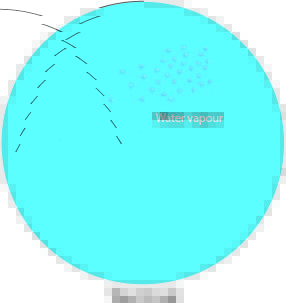
Water drop refers to the liquid phase of water, and water vapor refers to the gas phase of water. Water vapor flow is the movement of water molecules in the gas phase from one place to another. When we look at the water vapor flow in the shoes, it is the transfer of the sweat released to the skin surface from the shoe to the outside by passing through the shoe upper material section in the gaseous state, depending on the shoe internal gap conditions. In the meantime, sweat is first seen on the skin surface (Sweat Mechanism), and then it is expelled by passing through socks, lining, and inner support materials (felt, foam, thermoplastic, etc.) and the outer surface of the shoes, respectively. In this process, both socks, lining, inner support materials and upper absorb sweat; the water vapor flow is removed from the environment with air either through these layers or through the shoe collar. In the process of removing sweat from the shoes, the internal gap humidity and temperature of the shoes and the outdoor humidity and temperature values and the difference between these values play a critical role.
If we focus on the transfer of water vapor; the density of water vapor is 0.01 lbm/ft3, while the density of the water drop is 1013 lbm/ft3. In other words, the density ratio between the water droplet and the water vapor is 10 trillion1. The water vapor molecule is 0.0000001 mm, or 0.1 nanometer2. When we compare these two different information, it is seen that the ratio of the diameter of the water vapor to the water drop is 1/10000. In the example given for the pore width of Gore-Tex membranes: It is said that Gore-Tex membrane pores are 20000 times smaller than a water droplet, but 700 times larger than water vapor4. In other words, the volume difference between the water drop and the water vapor is 1.4 million. This ratio is almost as much as the difference between the volume of the sun and the earth. For this reason, there are ISO 14268 tests applied to leather and ISO 11092 tests applied to textiles and textile-like materials. As additional information, for waterproof and breathable membrane complex network structure where water vapor can pass and water drop cannot pass, maximum values are given on the market for how much water column volume will deform and transmit water against pressure.
Referances:
1: Vapour-Droplet Flow Equation, C.T.Crowe, 1975, https://inis.iaea.org/collection/NCLCollectionStore/_Public/07/237/7237283.pdf, Erişim Tarihi:31.03.2023.
- https://www.ampack.biz/eu-en/knowledge/building-physics/diffusion-of-vapour/water-vapour-diffusion#:~:text=A%20water%20vapour%20molecule%20has,is%20totally%20invisible%20to%20us., Erişim Tarihi: 31.03.2023.
- https://www.ikeuchi.eu/news/measurement-of-droplet-size/, Erişim Tarihi: 31.03.2023.
- https://endorfeen.com/gore-tex-everything-you-need-to-know/, Erişim Tarihi 31.03.2023.
/*! elementor – v3.11.5 – 14-03-2023 */
.elementor-widget-image{text-align:center}.elementor-widget-image a{display:inline-block}.elementor-widget-image a img[src$=”.svg”]{width:48px}.elementor-widget-image img{vertical-align:middle;display:inline-block} 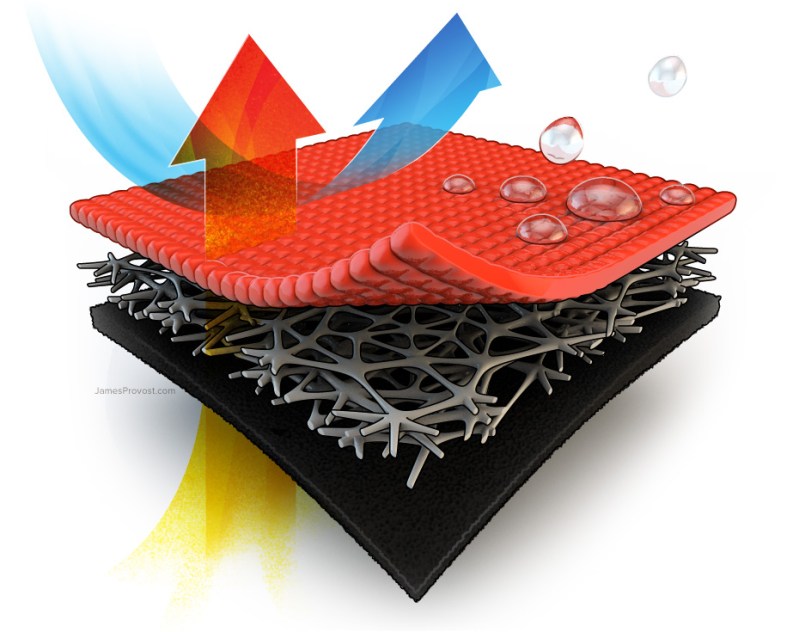
 Aerofoot
Yorum bırakın